Time
A hedge takes ten years to become itself. An oak takes a human lifetime. Nothing in a serious garden happens on the scale of a notification. To plant is to accept that the most meaningful results belong to a future you may not fully see — and to find that acceptable, even beautiful. The garden teaches patience the way almost nothing else in modern life does.
Seasons and colour
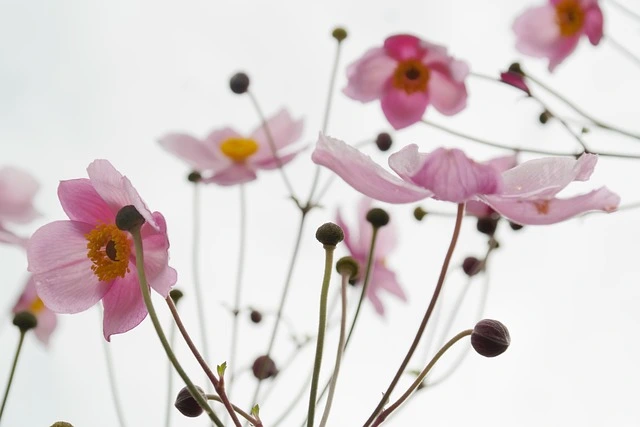
A garden is never finished, because it is never the same. Spring is green and white. Summer is heavy and saturated. Autumn burns. Winter draws in black ink. The same view — from the same window — rewrites itself four times a year, and then starts again. Nothing made of bronze or canvas can do this. The vegetal forces us to notice change, rather than resent it.
Cycle of life and death
Plants make no effort to hide what they are doing. They grow, they flower, they fade, they fall, they feed the soil that will grow the next generation. Compost is not a metaphor — it is the literal, working mechanism of a garden. Living alongside that honesty is quietly reassuring. It reframes endings as passages, and decay as a form of participation.
Light
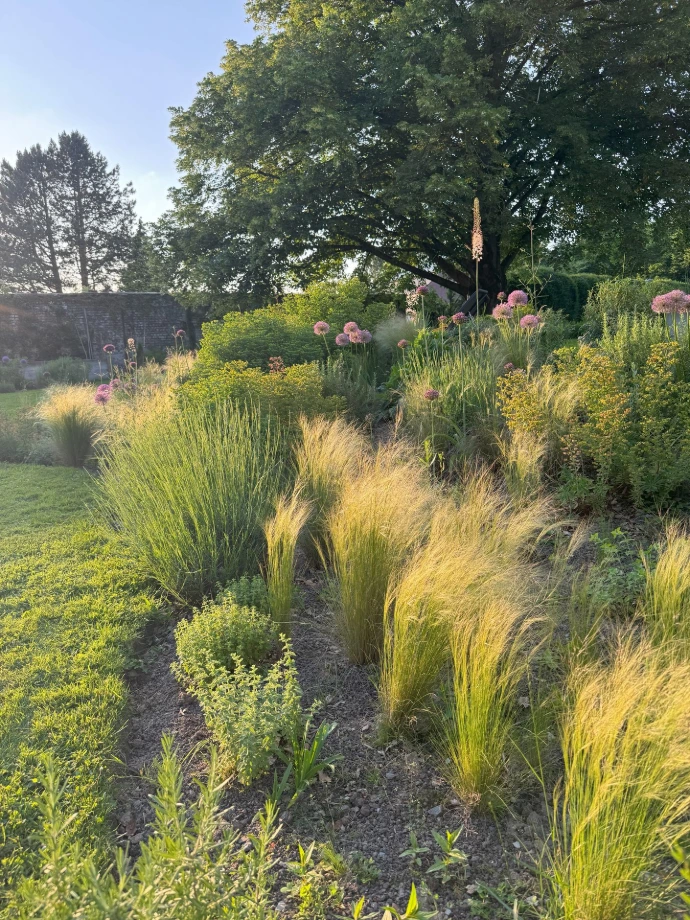
Every plant is, in a sense, a sculpture of light. A grass catches the low sun and glows. A canopy filters the light into green. A clipped yew absorbs it and becomes almost black. When we compose a garden, we are not placing objects in space — we are placing light-catchers, and the artwork is what happens between them at 7 a.m. and at 7 p.m., in June and in December.
Senses
A painting is seen. A garden is smelled, heard, touched, walked through. A box hedge warmed by the sun has a scent — dry, faintly feline, impossible to describe and impossible to forget. Wet earth after rain is almost a drug. Grass under bare feet, the sound of poplars in wind, the bitterness of a crushed bay leaf between the fingers — gardens engage the whole sensory body, not only the eye. This is something no indoor artwork can offer.
Instinct & Origin
Before we were anything else, we were a species that lived in landscapes. The part of us that relaxes in a garden, that feels something shift when we see a clearing in a wood or a pond in the evening, is older than language. A well-made garden speaks to that layer. It does not explain — it recognises. This is why a good garden feels, on some level, like coming home to a place you have never been.